Wednesday, June 17, 2009

On Death & Dying

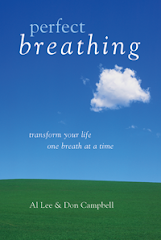
We've long been fascinated by the final act, the drawing of one's last breath. Dying is a profound experience, second only to being born. We devoted an entire chapter to it in our book, "Perfect Breathing." We learned a great deal about the dynamics of that final breath in talking with hospice worker Marcella Brady, who shared her experiences in helping dying people find peace as they leave this world. And we've have learned more in a thoughtful two-part piece by Ann Catlin, a licensed massage therapist writing for Massage Today.

In Part One, she talks about the pain of life-limiting illness, and the substantial effect that massage can play in palliative care. In Part Two, she really caught our attention with her use of the breath. She sets up a frame of reference for helping dying people, and offered three key points: Dying is not just a medical event; dying is a part of living; and dying is a deeply personal experience.

She incorporates synchronized breathing in her healing touch, which she teaches to hospice workers. As she states:

"Synchronized Breathing. This technique is effective to help ease difficult breathing. It involves synchronizing your own breath with simple massage strokes. First synchronize the
rhythm of your own breath with slow effleurage strokes; breathing in as
your hands move distally (toward your own body). Then breathe out as
your hands move away from you. Let the sound of your breath be audible.
This is a silent interaction. No words are necessary to encourage a
natural synchronization with the rhythms of your breath and touch. If
the person cannot tolerate physical contact you may remove the touch
and focus only on the breath."

As Marcella Brady told us in our interviews with her, "Consciousness during death is different. It is much deeper when a person is dying. They are standing in two worlds, at the intersection. There is hesitation as they don't know where it leads. It is a very intense moment when it occurs. It is about your body and your spirit separating. You don't live and then die. It is a process that occurs through our entire life, but when someone hits the transition point I can often walk into a room and feel it. I used to bed focused on the shell on the bed and I was not conscious of what was really occurring. But now if I am conscious and aware of breathing, I can feel the presence in the entire room. You can see and feel this light. It is really quite amazing."

Words to live by.


Tuesday, June 16, 2009

Eat right, breathe right

Interesting post in the Idaho Statesman online recently, regarding the synergy between eating right and breathing right.

Says authors Mike Roizen and Mehmet Oz: "The same stuff that makes your waistline and heart disease risk balloon inflates your chances of getting COPD [chronic obstructive pulmonary disease] - specifically, eating a typical Western diet of refined grains, cured and red meats, desserts and fatty foods like French fries and nachos. Nasty nitrites found in processed meats, along with the high glycemic load of refined grains, desserts and sweets, may inflame your breathing apparatus and ultimately damage it. But generous portions of fruit, veggies, fish and whole grains may help bring you a breath of fresh air.

Another way to keep your breathing apparatus healthy, they say, is get enough vitamin D. "This vitamin may be able to help put out the fire of inflammation that leads to chronic lung disease. How much is enough? 1,000 IU every day if you're under age 60; 1,200 if you're older than that."

Makes sense.

Read the full article here.


Monday, June 15, 2009

Save the Ritalin, Garth: Try Breathing Instead

Kids, by nature, are a rambunctious lot. But today's kids are just as stressed as adults. Pennsylvania grade school teacher Marilyn Molchany found a solution to calming her class down and finding some focus: breathing. In a LancasterOnline.com article, Molchany talks about her class, the 11 high-energy boys who dominate it, and the savior she found in yoga instructor Suzanne Accardo.

Accardo taught "breathing techniques to get focused before lessons or at the start of the day," Molchany said. "I used soothing music to promote a quiet atmosphere while the students were working." The results were so impressive, she invited Accardo ack to her classroom next year.

"Ultimately we wanted to stress the importance of listening carefully and following directions," the teacher said. "We think of children as being carefree, but kids today are really stressed. Things are going on in their family life, maybe both parents are working adn - especially over the summer - they are being shuttled around to caretakers, or their parents are divorced, so they're splitting their time between houses."

So Molchany's been placing a heavy emphasis on breathing techniques."Breathing gives you something to focus on if you're stressed and need to relax," said yoga instructor Accardo. "If you give your mind one thing to focus on, it's easier to calm down. The class is about learning to calm yourself." She talks them through "guided imagery," where they imagine focusing on an image in their mind of a butterly or a balloon, but she likes focusing on the breath best, because it teaches children that they can calm down anywhere.

"If you learn breathing techniques," she said, "you can use them not matter what house you're in, what car you're in or where you are. Your breath is always with you."

We couldn't agree more.

For the full article click here


Wednesday, June 10, 2009

Mindful Breathing Eases COPD Symptoms

I'm surprised at how many people I know who are suffering from COPD (chronic obstructive pulmonary disease). Sure, most of them are from my parents generation, but you may know a few yourself. In our book "Perfect Breathing" we detailed a few studies that showed that conscious, intentional breathing could significantly reduce the effects of COPD and improve the quality of life for those who are afflicted.

One of the problems for people with COPD is that the airways collapse before the exhale is completed. This traps stale air in the lungs. Dr. Paul G. Donohue recently reprinted a pursed lip breathing technique that creates some back pressure and helps to keep the airways from collapsing before the exhale is complete allowing for a better, more cleansing breath.

If you know anyone who suffers from COPD, do them a favor and have them read Dr. Donohue's column.


Tuesday, June 2, 2009

Mindfullness and Breathing Ease Work Stress

We've been saying it for years, but it bears repeating in these especially stressful times: Your breath is the most powerful weapon you have to counteract the host of negative effects that chronic stress has on your mind, body, and emotions. Anxiety, depression, exhaustion, high blood pressure, cholesterol problems, as well as decreased immune function are just a few of the common maladies related to chronic stress.

A recent study at West Virginia University aimed at learning how to best handle stress in the workplace found that participants who learned and practiced mindfulness techniques like breathing, yoga, and meditation improved their health after just 3 months.

"They had significantly less daily hassles, psychological distress and significantly fewer medical symptoms," says lead investigator Kimberly Williams.

Read the full story here.

Add to Technorati Favorites

Neckties & Breathing

We had to laugh at a recent post by writer James Protsman in Manitowoc, Wisconsin's Scene magazine. The title of his piece, "It's Time For A Fashion Necktie Party," railed against the wearing of neckties. Of late, we've had several inquiries about the sartorial effect of some clothing on breathing (i.e., belts and neckties).

Turns out, there are legitimate reasons you're asked to wear loose-fitting clothing in yoga and other workout classes. Rants Mr. Protsman, a university instructor for the University of Wisconsin:

"During the years I wore a tie and wanted to relax after a hard day of work, the first thing I instinctively did was remove my tie. This has a relaxing effect on body and mind that millions of tie-wearers will readily attest to.

"There is a reason for this relaxing effect: better breathing. Long ago animal researchers interested in testing the complex nerve pathways that control breathing discovered that if you touch the larynx of some animals (including dogs) it inhibits breathing. One reason physiologists study dogs is because their physiology in many ways is similar to that of humans.

"The discovery about the larynx and breathing was published but nobody checked to see if this breathing reaction was true for humans.

"Verbal breathing, the special kind of breathing we do when we produce word sounds, suffered a lot. When I checked how many words I could read in a single inhalation, which is a simple measure of reading prowess, it was far less than when the larynx was untouched. Singing and speaking were worse because of poor breath support.

"It is harder to produce word sounds when anything touches the larynx. Because of this, the operational speed and quality of every word-based cognitive process declines. It is actually not necessary to touch the larynx to get these grossly depressing effects. A touch anywhere on the neck does the same thing, especially when the area over the windpipe is touched.

"You need to prove this yourself. With neck bare, untouched by anything, sing a song or read out loud or silently, then touch your neck anywhere and try these activities again. You should notice touching the neck makes word production more difficult. When something touches the neck, the pressure, no matter how slight, causes neck muscles to reflectively tense.

"This is a pressure reflex. It seems to be a defense mechanism to protect the windpipe and arteries in the neck from attack. Neck muscles stay tensed until the pressure is removed. A tensed neck makes it harder to move the air formation of word sounds when speaking, reading, thinking, etc. Because of this pressure reflex, the necktie has to go whenever a male wants to be at his mental and vocal best."

We'd like to add our vote to the ban-the-necktie movement! Tell your boss they're a health hazard!

For the full article click here

Add to Technorati Favorites

Beat the heat with simple breathing exercises

It's getting to be that season when temperatures warm up. The Times of India (where they know hot...) offers some simple remedies to beat the heat by simply using your breath.

The simplest and easiest is:

Sheetkari pranayam

Breathe in through the mouth and out through the nose.

To breathe in, open the lips as wide as you can, exposing the teeth and gums. Touch the teeth together. As you breathe in air will go through the teeth, instantly cooled by your saliva. Then close your mouth and breath out through the nose. If you are doing it right you will immediately feel the coolness go right down your body.

It also strengthens weak teeth and gums. (Go figure...)

This one also works, but takes some visualization:

Visualization and breathing

This is a fun way to cool down in the worst heat. Visualize yourself in a lovely cool place like walking in the snow, or a cool wind blowing. Visualize every detail of the place, making the visualization as clear as possible. Focus on feeling the coolness of the wind or snow.

Breathing normally, imagine that with every breath you are breathing in the chill of the air and it is filling you with coolness. In just a few minutes you should be relaxed and comfortable, and very cool no matter how hot the summer.

For the full article click here

Add to Technorati Favorites

Welcome!

Welcome to the Perfect Breathing Blog!

With these posts we will be keeping you up to date on the lastest news, research, applications, and techniques, as well as advice and expertise from people who are living examples of the power and potential of conscious breathing. Our health, ability to heal, mental and physical performance, emotional wellbeing and spiritual experience can be dramatially improved by integrating conscious breathing into our lives. To that end we will seek out and deliver the cutting edge science, ancient wisdom, and everything in between that you can use now to take advantage of this amazing source of energy.

But we'll need your help. Let us know about your experience and your questions, information that you've uncovered, and people you've come across who are using conscious breathing techniques to achieve remarkable results.

Let the conversation begin. We look forward to hearing from you!

Don Campbell & Al Lee

Add to Technorati Favorites